MIRANO by Varun Impex logo
Kitchen Fittings / Aluminium Profiles

Aluminium Profile Handles for Kitchens & Wardrobes

Handle profiles, recessed gola channels and glass/mirror shutter profiles — European-engineered extrusions in matte black, champagne gold, anodised silver and rose gold.

A cabinet with no visible handle still needs somewhere for a hand to catch. That's the entire job of an aluminium profile — a continuous extruded channel fixed along the top or side edge of a shutter or drawer front, doing the work of a handle without breaking the line of the cabinetry. Mirano's aluminium profile range covers handle profiles, recessed gola channels and shutter-frame profiles for glass and mirror doors, engineered to the same standard as the drawer and pull-out systems they sit alongside in a project.

For architects and interior designers, the profile is often the detail that decides whether a kitchen reads as handleless-premium or simply handle-less-cheap. For OEMs and modular furniture manufacturers, it's a fabrication decision — cut length, board compatibility and corner-joint quality all affect how consistently a batch installs across dozens of units. This page is written for both audiences.

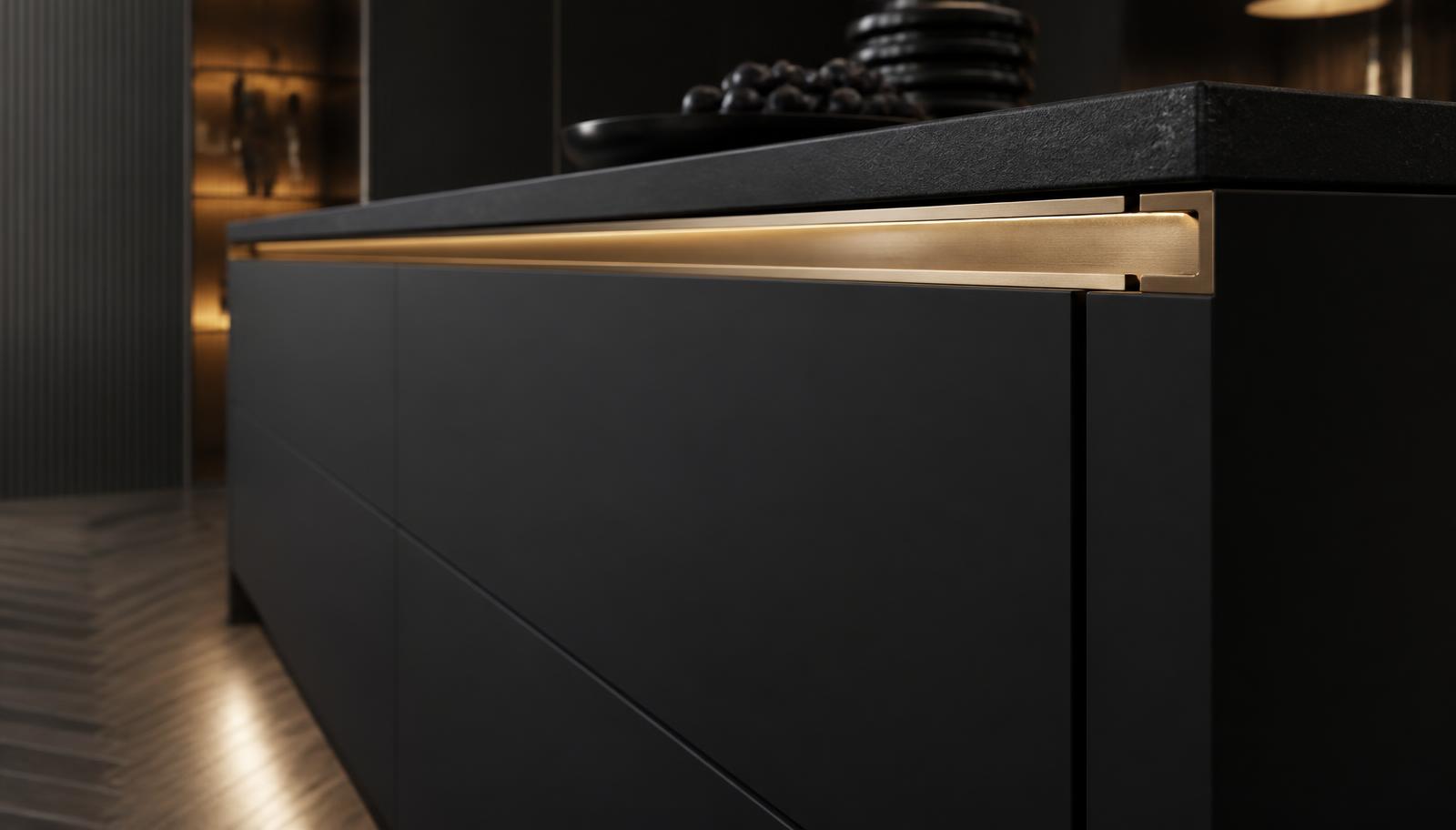
Matte black handleless kitchen island with a continuous champagne gold aluminium profile handle running along the drawer fronts
Definition

What Is an Aluminium Profile Handle

An aluminium profile handle is an extruded aluminium section — typically G-shaped or C-shaped in cross-section — fixed along the top edge of a cabinet shutter or drawer front. Instead of a separate knob or bar handle screwed to the face, the profile becomes part of the shutter's edge, leaving a slim, continuous groove that the fingers slide into. Because the profile runs the full width of the shutter, it also does a second job: it caps and protects the raw edge of the board, which matters over years of daily opening and closing.

The same aluminium extrusion technology is used, in a slightly different form, for gola profile channels (a separate recessed track fixed to the carcass rather than the shutter) and for profile-framed glass and mirror shutters, where the aluminium section holds the glass or mirror panel in place around all four edges. All three are covered in this range.

The Range

Types of Aluminium Profile Systems

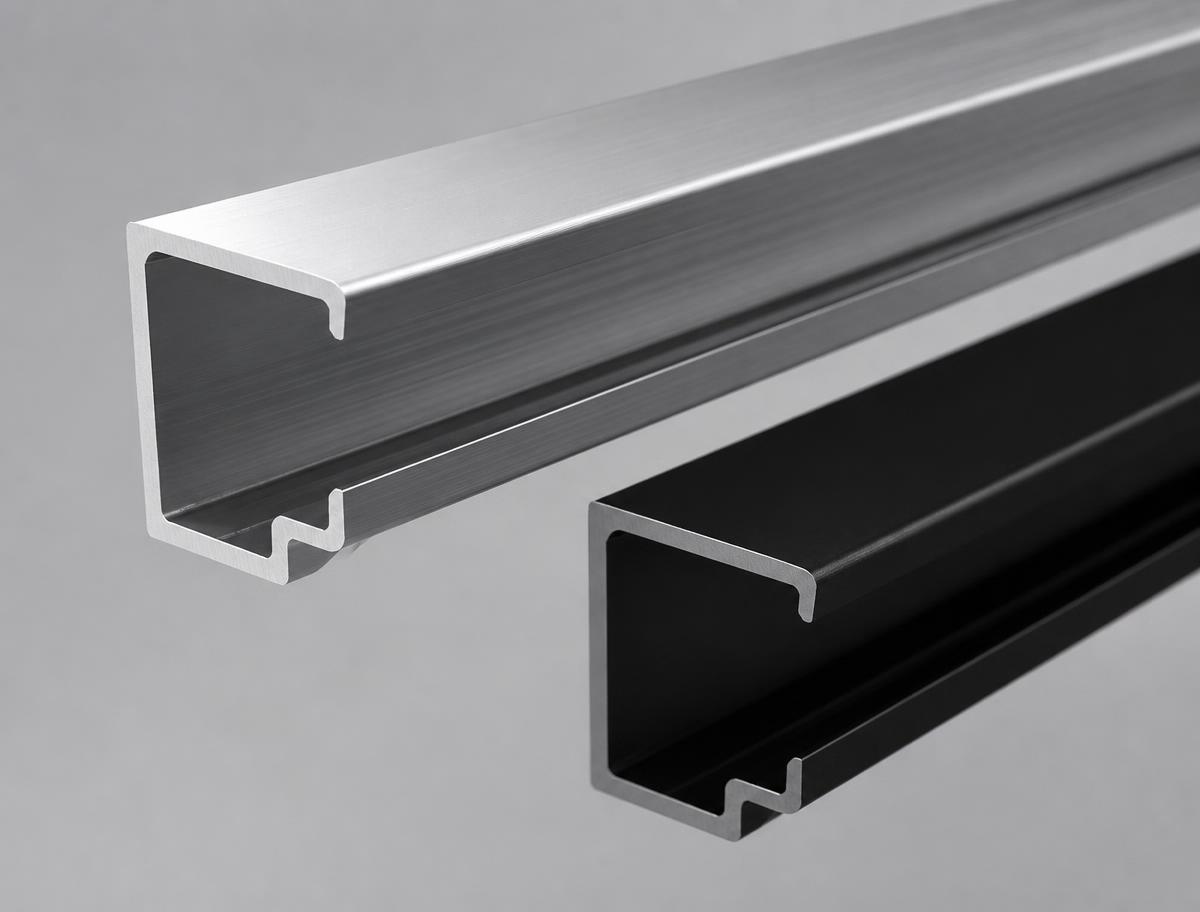
3D render of brushed anodised silver and matte black aluminium G-profile and C-profile cabinet handle extrusions showing cross-section geometry
01

G-Profile & C-Profile Handles

The direct handleless replacement for a conventional cabinet handle

The most widely specified format — a G-shaped or C-shaped extrusion fixed to the top edge of a shutter or drawer front, with an ergonomic curve engineered for a comfortable grip rather than just a functional lip. This is the direct handleless replacement for a conventional cabinet handle, used across kitchen base units, wall units and tall units.

  • Fixed to the shutter edge — moves with the shutter
  • Caps and protects the raw board edge
  • Suits base, wall and tall units alike
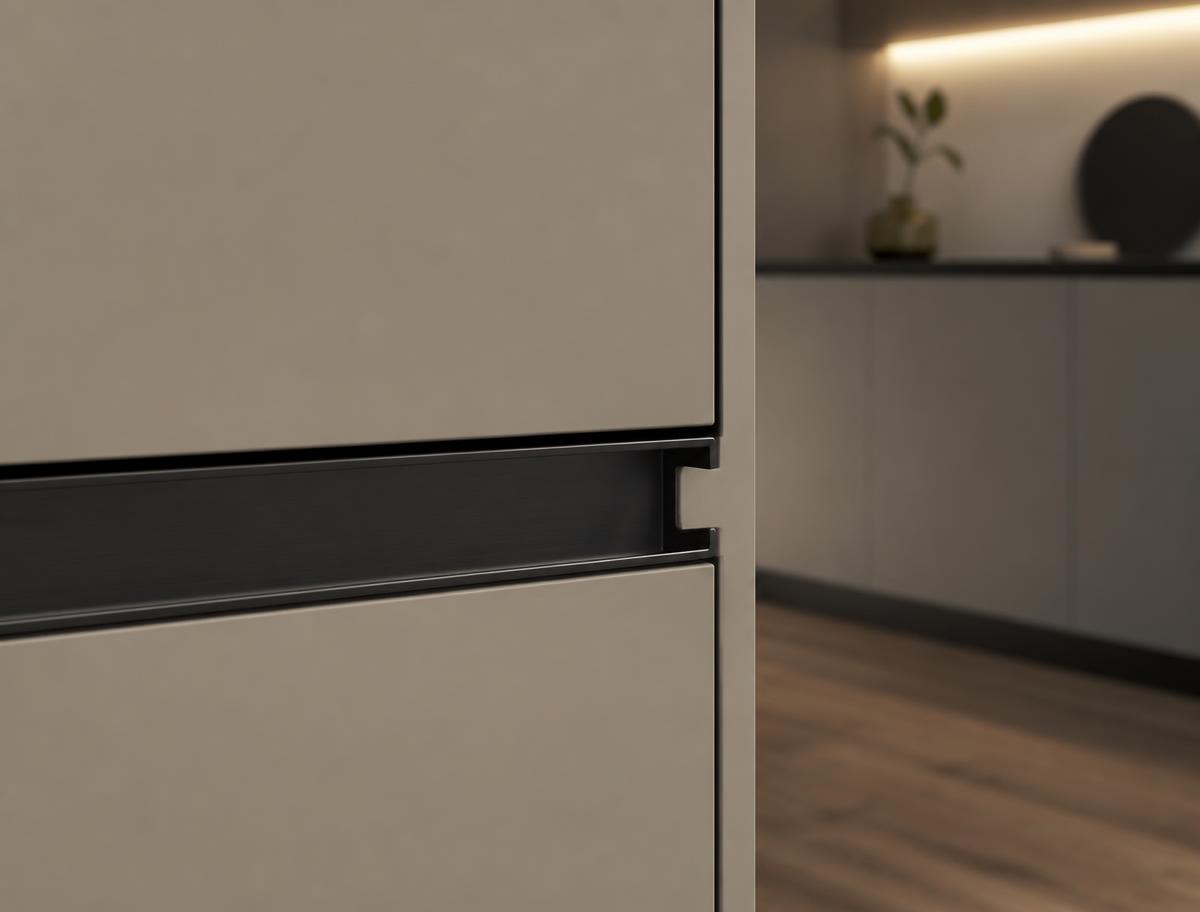
3D render of a recessed matte black gola profile channel creating a shadow-line grip between two handleless kitchen cabinet fronts
02

Recessed Gola Profile Systems

A shadow-line grip that is almost invisible until the hand reaches for it

A gola profile sits in a recessed channel below or beside the shutter rather than on its edge, creating a shadow-line grip that's almost invisible until the hand reaches for it. It's the format most associated with a fully handleless, minimalist kitchen face, and it needs more precise carcass planning at the design stage — which is where an architect's early involvement matters.

  • Fixed to the carcass, not the shutter
  • Fully handleless, minimalist face
  • Requires carcass planning at design stage
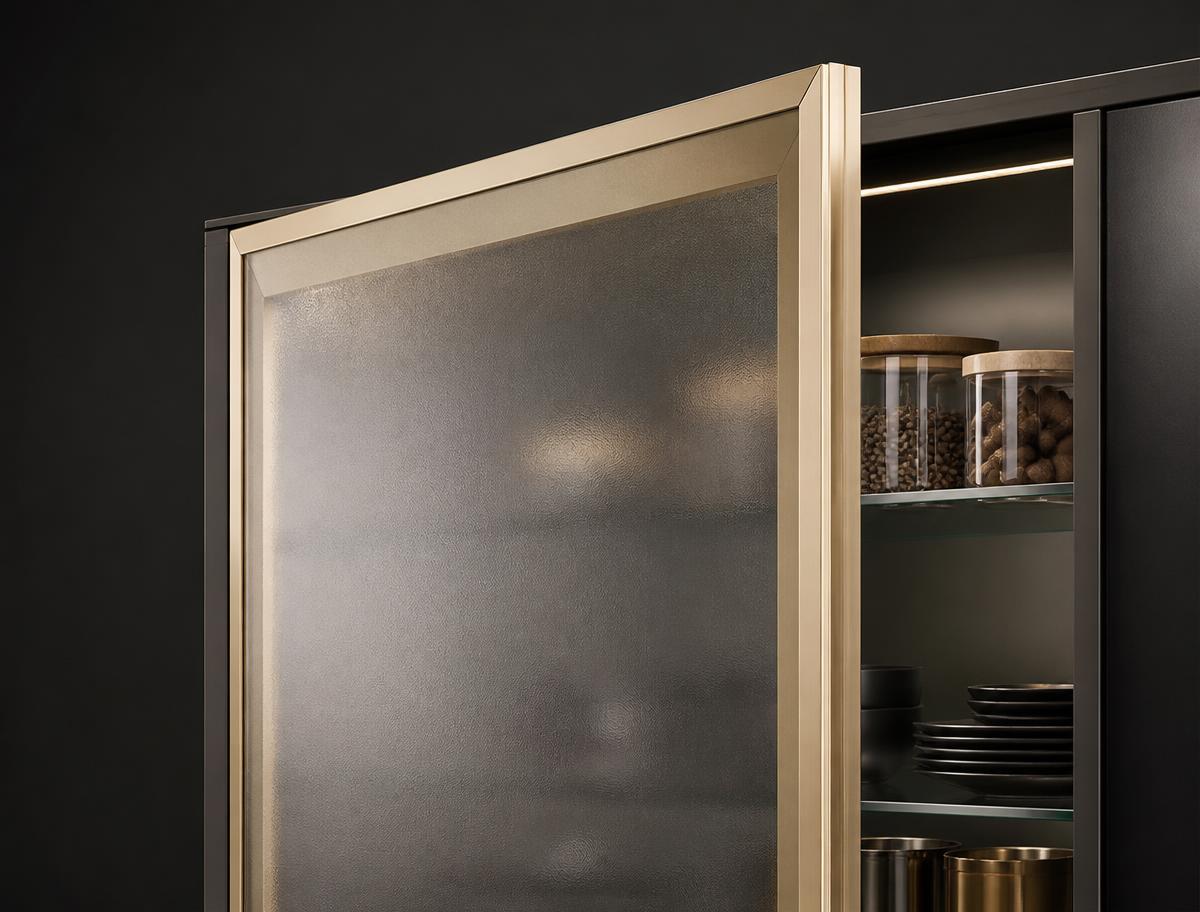
3D render of a champagne gold mitred aluminium frame profile shutter holding a frosted glass panel on a kitchen display cabinet
03

Aluminium Profile Shutters for Glass & Mirror Doors

A mitred aluminium border holding a glass or mirror panel

Here the aluminium profile frames the shutter itself rather than just providing a grip — a mitred aluminium border holding a glass or mirror panel, corner-jointed with connectors for a clean, gap-free finish. It's specified for display units, crockery cabinets and wardrobe mirror doors, and is available in the same finish range as the handle profiles so a kitchen or wardrobe run stays visually consistent.

  • Mitred border with corner connectors
  • Display units, crockery cabinets, mirror doors
  • Same finish range as the handle profiles
Finishes

Finishes & Design Options

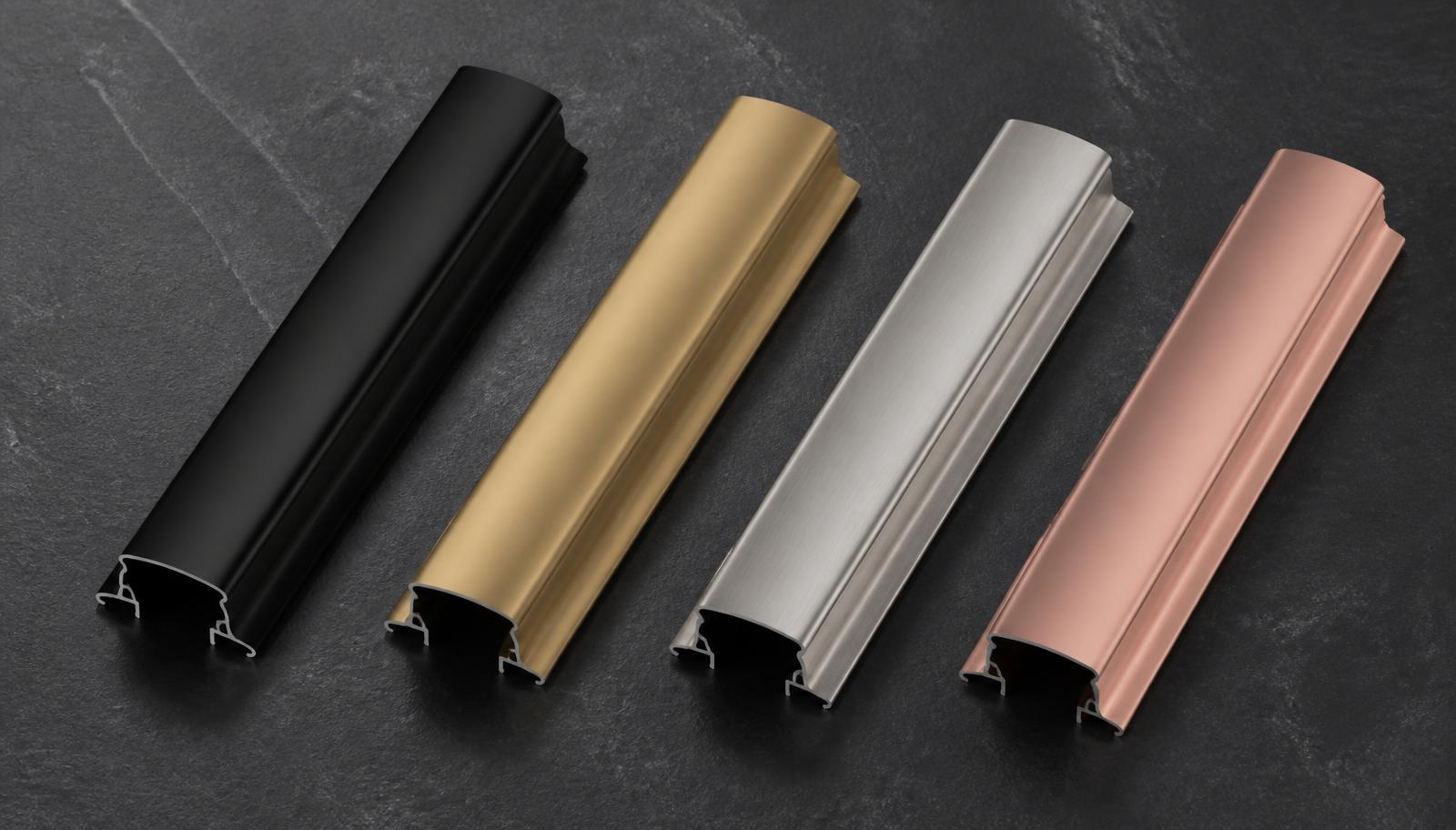
Finish is where an aluminium profile either reads as premium or looks like hardware. Mirano's profile range is available in matte black, champagne gold, brushed/anodised silver and rose gold, with anodising and powder-coat options depending on the finish and application. Anodising is generally specified where the profile will see heavier daily contact — it forms a harder, more scratch-resistant surface layer than a sprayed powder coat, at a marginally higher cost, which is a trade-off worth discussing with your Mirano specification contact for high-traffic zones like a working kitchen's daily-use drawers.

Matte Black

Contemporary, high-contrast against light shutters

Champagne Gold

Warm premium accent for dark or neutral cabinetry

Brushed / Anodised Silver

Neutral, hardest-wearing everyday specification

Rose Gold

Softer metallic for boutique and residential interiors

Four aluminium profile handle finish samples on dark stone — matte black, champagne gold, brushed anodised silver and rose gold
Engineering

Built to Perform — Material & Engineering Standards

Aluminium profile quality comes down to three things that aren't visible in a showroom sample: extrusion tolerance, wall thickness, and how well the finish is bonded to the metal. A profile extruded to a tight tolerance sits flush and mitres cleanly at the corners; one that's slightly out of true shows as a visible gap or step once fitted. Mirano's profile systems are engineered through the same European manufacturing partnerships — including Eureka Italia — that supply the drawer and pull-out systems in this range, so a profile ordered today will still hold its line and its finish years into daily use, the same standard architects and OEMs already know from the rest of the Mirano catalogue.

Extrusion tolerance

Tight tolerances mean a profile sits flush and mitres cleanly instead of showing a step at the joint.

Wall thickness

Adequate wall section keeps the profile true under years of hand pressure and shutter movement.

Finish bonding

Anodised layers bond into the metal; powder coats sit on top — the difference shows in high-contact zones.

Specification

Specifying the Right Profile — What Actually Matters

A handful of factors decide whether an aluminium profile performs well on a real project, beyond which finish looks best on a sample board:

Board thickness compatibility

Most profile handles are engineered for 16mm–19mm shutter boards; heavier tall-unit or wardrobe shutters may need a 25mm-compatible profile. Confirm this against your board spec before finalising cut lengths.

Profile length and joinery

Profiles are supplied in standard extrusion lengths and mitre-cut to size on site or at the OEM's factory. Clean 45° corner joints depend as much on the corner connector quality as on the profile itself.

Finish durability for the zone

A profile on a daily-use kitchen drawer sees far more hand contact than one on a display cabinet — anodised finishes are worth specifying wherever contact frequency is high.

Consistency across a batch

For OEMs and dealers ordering at project scale, extrusion-to-extrusion colour and tolerance consistency matters more than any single sample piece — ask for batch documentation on large orders.

Project scale and lead time

Bulk and OEM orders should be planned against Mirano's production and dispatch lead times rather than retail stock — talk to the specification team early in a project timeline.

Applications

Where Aluminium Profile Handles Are Used

Kitchen cabinets are the largest application — base units, wall units, tall pantry units and drawer fronts all use profile handles or gola channels to keep a run of cabinetry visually continuous. The same profiles extend into wardrobe shutters and sliding wardrobe doors, where a handleless edge keeps a large surface looking uninterrupted, and into office and commercial furniture — reception counters, display units and storage systems — where a slim, snag-free edge is a practical requirement as much as an aesthetic one.

ApplicationTypical profileWhat to watch
Kitchen base & drawer frontsG-profile / C-profile handleAnodised finish for daily hand contact
Fully handleless kitchen faceRecessed gola channelCarcass planning at design stage
Display & crockery cabinetsGlass shutter frame profileCorner connector quality on mitres
Wardrobe & sliding shuttersHandle profile / mirror frame profile25mm board compatibility on heavy shutters
Office & commercial furnitureEdge / handle profileSnag-free edge and batch consistency
Why Mirano

Why Architects, Designers & OEMs Specify Mirano

Mirano by Varun Impex has been bringing European-engineered kitchen and wardrobe hardware to the Indian market since 2006, working with architects, interior designers, modular furniture OEMs, dealers and premium homeowners. Aluminium profile systems in this range are engineered through the same manufacturing partnerships behind Mirano's drawer systems, pull-out systems and wardrobe accessories, so a project specified across the full Mirano range gets one consistent standard of finish, tolerance and long-term durability — instead of mixing hardware from multiple suppliers and hoping the finishes age at the same rate.

FAQ

Frequently Asked Questions

It's an extruded aluminium channel fixed to the edge of a cabinet shutter or drawer front that acts as a built-in handle, giving a slim, continuous grip without a separate knob or bar handle fitted to the face.

A profile handle is fixed directly to the shutter's edge and moves with the shutter. A gola profile is a separate recessed channel fixed to the cabinet carcass, creating a shadow-line grip that sits below or beside the shutter rather than on it — used for a more fully handleless look.

Most profile handles are designed for 16mm–19mm shutter boards. Heavier tall-unit or wardrobe shutters may require a profile engineered for 25mm boards — confirm compatibility against your board specification before ordering.

Mirano's aluminium profile range is available in matte black, champagne gold, brushed/anodised silver and rose gold, with anodised and powder-coated finish options depending on the profile type and application.

Yes, when specified correctly. Anodised finishes hold up best on high-contact zones like daily-use drawers, since anodising bonds a harder surface layer to the metal than a sprayed powder coat. Extrusion quality and wall thickness also affect how well a profile keeps its shape over years of use.

Yes. The same profile systems are specified for wardrobe shutters and sliding wardrobe doors, and for office and commercial furniture such as reception counters and display units, wherever a slim, handleless edge is needed.

Architects, designers, dealers and OEMs can request samples, technical drawings and project quotes directly through Mirano's specification team — see the Request a Quote link at the end of this page.
Build with Confidence

Specify hardware that elevates every interior.

Talk to our specification team for samples, project quotes and dealer enquiries. We respond within one business day.